Milwaukee history
The Story of Old World Third Street
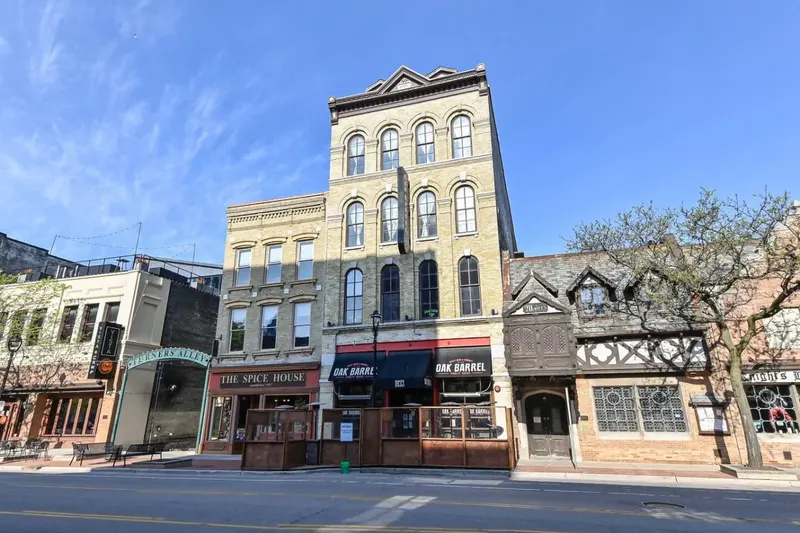
Milwaukee's Old World Third Street has an 1861 hardware store, a 1906 sausage factory and a 1913 bank.
Photo: Cream City Concepts.
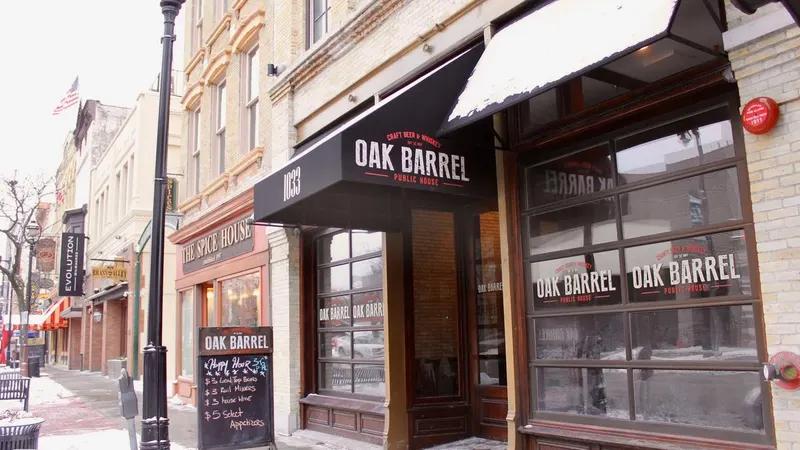
Old World Third Street today, with Oak Barrel at street level.
Photo: Cream City Concepts.
Updated
About this story
A feud over bridges, a German main street, a hardware store, a sausage shop and a bank full of vaults. This is the history of the street Oak Barrel and Who's on Third call home.
Stand outside Oak Barrel Public House and you are looking at a hardware store built in 1861, with a sausage factory from 1906 across the way and a bank from 1913 a short walk south. Here is how one Milwaukee street got that way, from a feud over bridges to a sausage counter that has stayed on the same block since 1880.
Three towns and one river
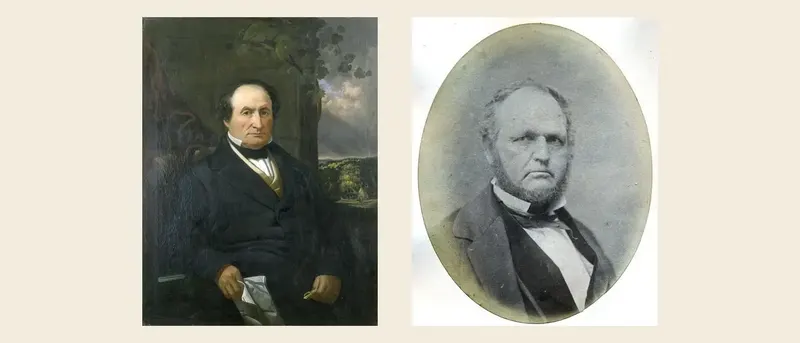
Milwaukee did not begin as one city. It began as three rival settlements gathered around the Milwaukee River. Solomon Juneau's Juneautown sat on the east side, Byron Kilbourn's Kilbourntown on the west, and George Walker's Walker's Point to the south. A city marker on the Riverwalk names all three and says the rivalry between the first two was particularly bitter.
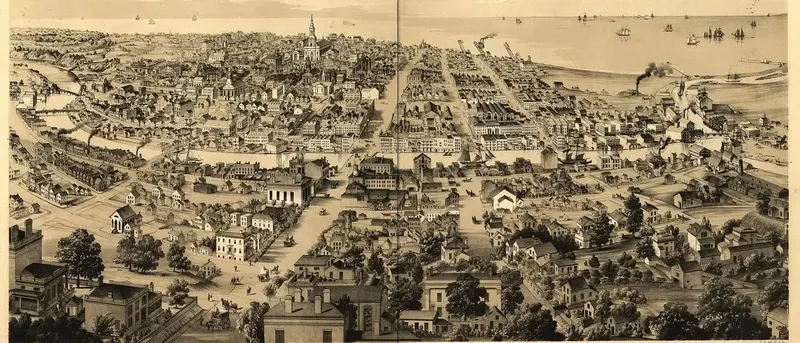
Kilbourntown is where our street was born. Its first business center grew at what is now Third Street and Juneau Avenue, on high ground five blocks north of Wisconsin Avenue, which was then a swamp where wild rice grew. The city's preservation report calls that corner a strategic transportation node, because roads to Green Bay and to Madison met there.
So shops, taverns, hotels and livery stables gathered at Third and Juneau within the first few years. Pioneer historian James Buck remembered that Chestnut Street, now Juneau Avenue, and Third was the heart of the flourishing business section, while Spring Street, now Wisconsin Avenue, stayed quiet. Third Street was the busy business section on the west side while Wisconsin Avenue slept.
The Bridge War of 1845
Rivals do not share bridges easily. Kilbourn built a little steamboat so newcomers landed on the west side first, and the east side answered with the first bridge between the two towns, built in 1840 at present‑day Juneau Avenue. More bridges followed at Wisconsin Avenue and Wells Street, and most of the money came from the east side.
Trouble came in the spring of 1845. A schooner damaged the Wisconsin Avenue bridge on May 3. Four days later Kilbourn pushed a late‑night council resolution to take the Juneau Avenue bridge out of service, and the west approach was dug away the next morning, leaving a span that stopped just short of the bank. East siders woke to the news and ran to the river.
The crowd dragged a cannon to the water's edge, loaded it with clock weights and aimed it at Kilbourn's house. A respected east side neighbor arrived with news that turned the mob around. On May 28 another crowd wrecked the draw mechanism on the Wisconsin Avenue bridge. By the end of the year the council had settled the bridge question for good.
The lasting mark is on the map. A city marker on the Riverwalk says Kilbourn deliberately arranged the west side street grids so they would never match the grids across the river, which is why downtown bridges cross at an angle to this day. On January 31, 1846, the three settlements became the City of Milwaukee, and Solomon Juneau was elected its first mayor.
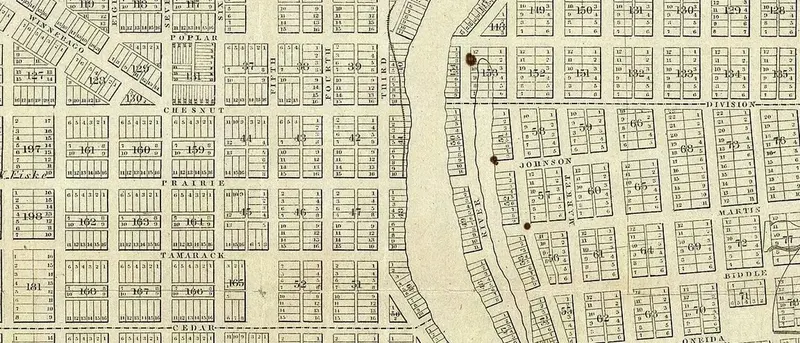
In looking back to the time when this occurred, from today, how perfectly foolish the whole proceeding appears.
A German main street
By the time of the 1858 Milwaukee business directory, about 90 percent of the owners on Third Street had German surnames. Neighborhood shops, regional wholesale houses and light manufacturing mixed along the blocks, and the street had also become the institutional center of the German community. German settlers had arrived in large numbers from the later 1840s.
Pritzlaff Hardware is the story closest to us, because it lived at our address. John Pritzlaff arrived from Germany in 1841, worked for a hardware merchant, and opened his own store on Third Street in 1850. In 1861 he replaced his frame shop with the brick Italianate building at 1033 that still stands. A fourth floor was added about 1890.
His business grew until it served customers from the western Great Lakes to Missouri and the Dakotas. The city's preservation report counts him among the three largest wholesale hardware dealers west of the Alleghenies. In 1874 he moved the wholesale trade to a bigger building elsewhere and kept the Third Street building for another company.
Saloons were the social clubs. John Hinkel came from Germany in 1857, worked six years for the Best brewery, then opened his own saloon on Third Street. In 1877 he built Hinkel's Central Hall at the State Street corner, and its upstairs hall was rented to unions, civic groups and fraternal clubs. In 1889 Schlitz built a corner saloon around the corner on State Street.
The shops were just as German. Adolph Schoenleber, a cabinet maker who left Germany during the 1848 Revolution, sold furniture on the street. Otto Thiele ran a drug store, John and Charlotte Lipps a millinery shop, and William Steinmeyer a grocery with a fleet of delivery wagons, one of the first food stores in Milwaukee with refrigeration.
Usinger's, on the same block since 1880
Fred Usinger came to Milwaukee from Germany in the late 1870s with a pocketful of sausage recipes. He went to work for Julia Gaertner, a widow who ran a small butcher shop on Third Street, and in 1880 he bought the shop. He and his wife lived in the rooms above the store and worked sixteen to eighteen hours a day.
Early customers were saloonkeepers, whose free lunch depended on good sausage and who paid a premium for it. By the turn of the century, Usinger's says, well‑to‑do German Milwaukeeans did their shopping on Third Street and the store was a popular stop. Soon the sausage was shipping as far as New York, and Usinger's was among the first Wisconsin sausage makers to seek federal inspection.
In 1906 the old shop gave way to the tall brick building at 1030, which held every part of the operation except slaughtering. In 1983 an addition rose on the vacant lot next door, where the Metropolitan Block, an office building from about 1889, once stood before a fire in 1976 gutted it and the city razed it.
Fred died in 1930 and the business passed to his son, then to the third generation in 1953. Fritz Usinger, the founder's great‑grandson, became president in 1988, and the company says fifth generation family members are now part of the firm. The original ovens and recipes are still at the Third Street factory, and in 2002 Usinger's hot dogs went to the Winter Olympics.
Usinger's moved part of its production to a larger plant in Walker's Point in 2004, but the company still calls the original Third Street store its heart and soul. The retail counter is where it has always been, and the old recipes are, by the company's account, unchanged since 1880.
A bank, a brewery crowd and seven vaults
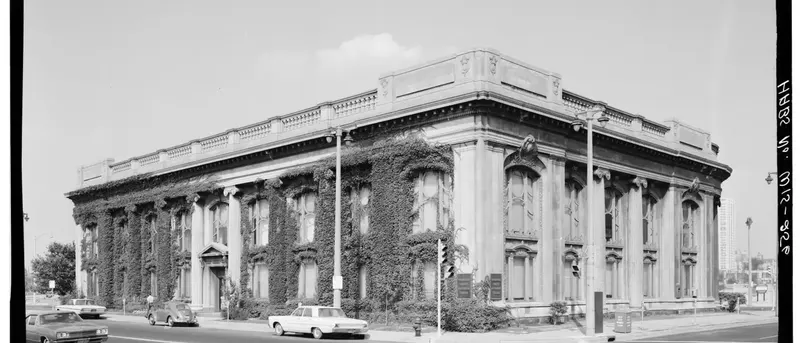
A short walk south, a limestone building with Ionic columns holds the Milwaukee County Historical Society. It began as the Second Ward Savings Bank, founded in 1856 as one of the first banks in Milwaukee. The present building went up in 1913, designed by the architects Kirchhoff and Rose for a triangular lot with streets on all three sides.
After a reorganization in 1866 the bank was nicknamed the Brewers Bank, because it was owned and patronized by leading brewery owners: Valentine Blatz, Joseph Schlitz, Philip Best, Emil Schandein and August Uihlein. It drew many depositors from the German-American community and was known for sound investing.
In the Panic of 1893 a run on the bank looked certain. August Uihlein walked in and told the crowd he would personally guarantee every deposit. The crowd went home, and the Second Ward Savings Bank was one of the few major Milwaukee financial institutions to come through that year.
The bank merged with the First Wisconsin National Bank in 1928, and First Wisconsin donated the building to Milwaukee County in 1965 for the Historical Society. The building was originally a bank with seven vaults, and today the former vaults hold the records of Milwaukee's past. A society director says a number of beer barons kept their money here.
Streetcars on Third Street
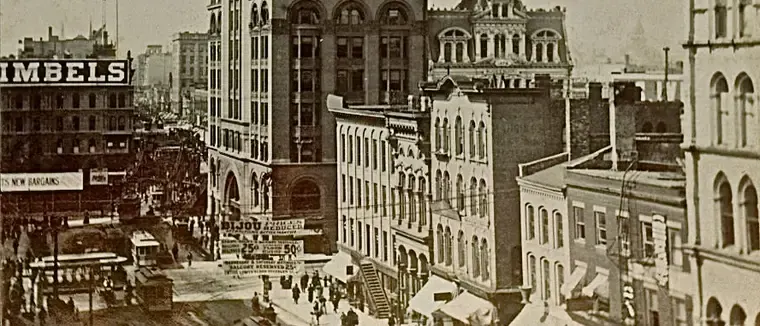
Milwaukee's first horse‑drawn rail cars began running in May 1860, along what is now North Water Street. Third Street got its own line when the Milwaukee City Railway Company was franchised in 1865, running between Juneau Avenue and Walnut Street. In the 1880s the line was extended south to State Street, where it met a line running along Plankinton Avenue.
Milwaukee welcomed its first electric streetcar in April 1890. Electrification in the 1890s dramatically increased ridership, and the Third Street route was then extended to meet Wisconsin Avenue, the main east and west streetcar artery. Third Street was the main route out of downtown to the north side, so shoppers could ride in from across the city.
That connection spurred some of the largest buildings on the street, the city's preservation report says, and the big blocks of those years included the five‑story Steinmeyer building at Highland Avenue. The streetcar era ended in 1958. The last streetcar ran on March 2, 1958, on the Wells Street line, and buses and trackless trolleys took over.
Cut off, then rediscovered
In the twentieth century the neighborhood around Third Street changed scale. Big new buildings rose nearby, such as the 1924 Milwaukee Journal building on State Street, and the small Victorian block became a distinct enclave among them. Then came the highway age.
In the 1950s and 1960s the Park East Freeway, built just north of Juneau Avenue, cut the district off from Third Street to the north. A few years later the buildings west of Fourth Street were cleared for surface parking, the site now of the old Bradley Center, and Pere Marquette Park was laid over the old course of Plankinton Avenue, which separated the block from the rest of downtown.
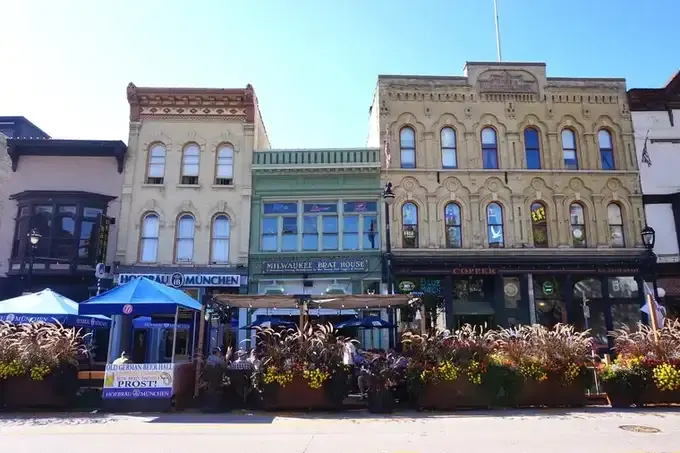
The 1970s brought a second look. The buildings that survived between State Street and Juneau Avenue were recognized as a specialty shopping district with a unique old world character. The intact blocks were refurbished and many facades were painted to show off their details. The district was listed in the National Register of Historic Places on March 19, 1987.
That listing protects 15 historic buildings built between 1855 and 1910, the last remaining portion of the original German retail district of Kilbourntown. The Bradley Center opened west of Fourth Street in 1988, and the Bucks and Marquette basketball played there through the 2017 to 2018 season. Fiserv Forum opened in 2018 just north of that site.
Our corner of the street
Oak Barrel Public House is in the building John Pritzlaff put up in 1861. The Cream City brick, the tall arched windows and the metal cornice on the fourth floor are the ones the city's preservation report describes.
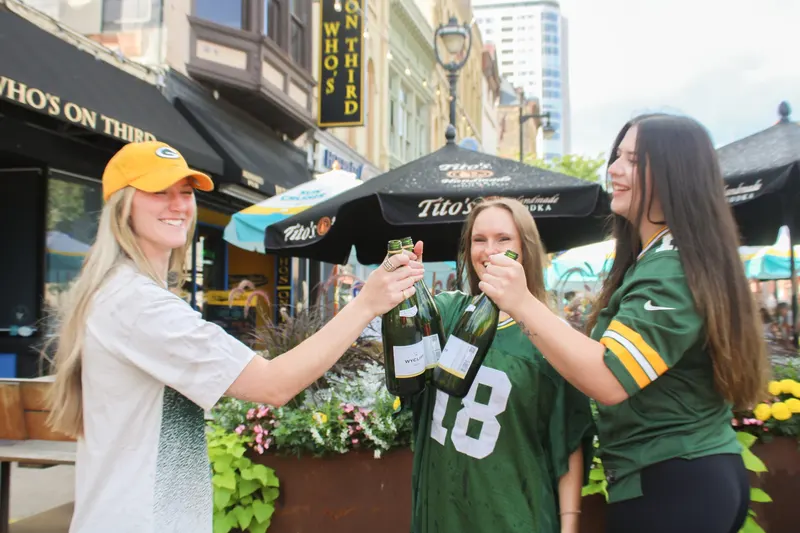
Who's on Third is at 1007, just steps from the corner where John Hinkel's saloon once stood. A saloon with a hall upstairs, a hardware store, a sausage factory and a corner grocer all shared this street. A pub and a pint here is not a new idea. It is the kind of business this block was built on.
Old World Third Street through the years
1845
The Bridge War
After a council resolution removes the west end of the Juneau Avenue bridge, angry east side crowds drag out a cannon and wreck part of another bridge. Source: Milwaukee Notebook, Milwaukee Independent.
1846
One city at last
On January 31 a charter joins Juneautown, Kilbourntown and Walker's Point as the City of Milwaukee, with Solomon Juneau as its first mayor. Source: Historical Marker Database.
1858
A German main street
The business directory shows about 90 percent of Third Street owners with German surnames, among shops, wholesale houses and light manufacturing. Source: City of Milwaukee Historic Designation Study Report.
1860
Horse cars arrive
Milwaukee's first horse‑drawn rail cars begin running in May along North Water Street. A Third Street line follows after the Milwaukee City Railway Company is franchised in 1865. Source: Radio Milwaukee and the City of Milwaukee study report.
1861
A hardware store at 1033
John Pritzlaff builds a three‑story brick Italianate store, the building Oak Barrel is in today. A fourth floor is added about 1890. Source: City of Milwaukee Historic Designation Study Report.
1880
Usinger's begins
Fred Usinger buys the Third Street butcher shop where he had been working, and the sausage business that bears his name takes shape. Source: Usinger's company history.
1890
Electric streetcars
Milwaukee welcomes its first electric streetcar in April. The Third Street route is later extended to meet Wisconsin Avenue, and ridership climbs. Source: Radio Milwaukee.
1906
The Usinger building
Usinger's replaces its old shop with the tall brick building at 1030, which holds every part of the operation except slaughtering. Source: Usinger's company history.
1913
A bank for the brewers
The limestone Second Ward Savings Bank, the Brewers Bank, is built, designed by Kirchhoff and Rose. Source: City of Milwaukee Second Ward Savings Bank study report.
1958
The last streetcar
The last Milwaukee streetcar runs on March 2 along the Wells Street line, and buses and trackless trolleys take over. Source: Radio Milwaukee.
1970s
A second look
Surviving buildings between State Street and Juneau Avenue are recognized as a specialty district with old world character, and their facades are refurbished and painted. Source: City of Milwaukee Historic Designation Study Report.
1987
National Register listing
The Old World Third Street Historic District is listed in the National Register of Historic Places on March 19, covering 15 historic buildings. Source: Wisconsin Historical Society record.
1988
Bradley Center opens
The Bradley Center opens west of Fourth Street and hosts the Bucks and Marquette basketball through the 2017 to 2018 season. Source: Encyclopedia of Milwaukee.
2018
Fiserv Forum opens
Fiserv Forum opens directly north of the old Bradley Center site and becomes the home of the Bucks and Marquette basketball. Source: Encyclopedia of Milwaukee.
Walk it today
Usinger's
The sausage shop, on the block where it began in 1880. Check the store hours before you go.
Taste the history
Usinger's history (Usinger's)Milwaukee County Historical Society
The former Second Ward Savings Bank, with its seven vaults. Check visiting hours first.
Oak Barrel Public House
Oak Barrel Public House, in the Pritzlaff Hardware building from 1861.
Our building
See Oak Barrel (Oak Barrel Public House)Who's on Third
Who's on Third, steps from the old Hinkel saloon corner.
Fiserv Forum
The arena at 1111 Vel R. Phillips Avenue, directly north of the old Bradley Center site.
Game night
Fiserv Forum (Fiserv Forum)
Where these facts come from
Wisconsin Historical Society 3 facts
City of Milwaukee Historic Preservation Commission 2 facts
TMJ4 1 fact
Historical Marker Database 1 fact
Milwaukee Independent 1 fact
Usinger's 1 fact
Radio Milwaukee 1 fact
Encyclopedia of Milwaukee 2 facts
More Milwaukee guides
The building at 1033
A hardware store, now Oak Barrel.
Walk it with us
Text us the date and how many are coming. We line up the rest.